
Article Directory
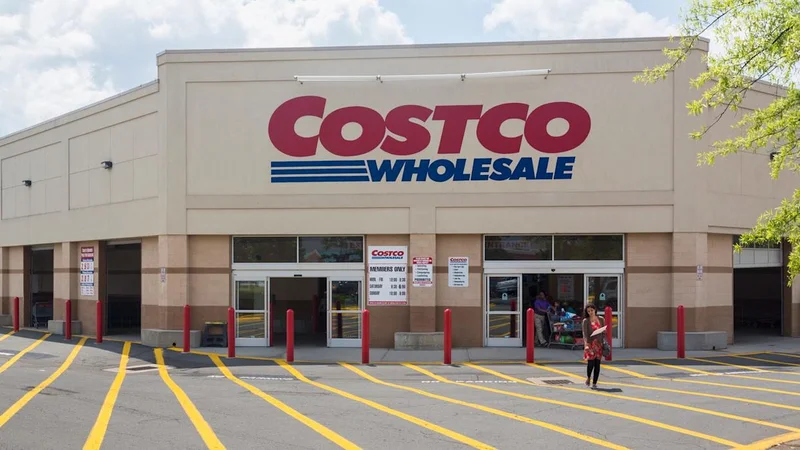
When a food recall hits, the headlines often focus on the immediate danger: stop eating, return for a refund. But for those of us who spend our days sifting through data, the real story isn't just the individual incident. It's the pattern. And what the Costco Recalls Pork Jerky, Caesar Salad, and Chicken Sandwich Over Metal and Plastic Contamination reveals isn't just a few isolated accidents, but what looks increasingly like a systemic vulnerability in the very foundations of our mass-produced food supply.
Consider the data points that have aggregated over just a few short months. First, in July, over a thousand pounds of Ada Valley frozen ground beef disappeared from shelves due to metal contamination. A blip, perhaps, an outlier in a vast supply chain. But then, on October 24, 2025, the narrative shifted. LSI, Inc., a major food manufacturer, initiated a recall of approximately 2.2 million pounds of its Golden Island Korean barbecue pork jerky. That's not a small batch; that’s a significant volume, distributed nationwide to both Costco and Sam’s Club. The culprit? "Pieces of wiry metal" traced back to a faulty conveyor belt during production. A mechanical failure, certainly, but one with a massive downstream effect.
The Unsettling Rhythm of Contamination
Just weeks after the jerky bombshell, Danger Notice: Plastic Risk Prompts Popular Costco Food Recall. This time, it was their popular Caesar Salad (Item #19927) and Chicken Sandwich with Caesar Salad (Item #11444), sold across the Midwest, Northeast, and Southeast. The issue here wasn’t metal, but plastic fragments found in the Caesar dressing, supplied by Ventura Foods. We're talking about sell-by dates from mid-October to early November 2025, a relatively tight window, yes, but still impacting countless grab-and-go lunches. Imagine, walking through the bustling Costco deli, the aroma of roasting chickens in the air, grabbing a quick salad, and unknowingly bringing home a plastic hazard.
This isn't just a series of unfortunate events; it's a sequence that demands a closer look at the underlying mechanics. My analysis suggests we’re seeing a disturbing frequency. From metal in beef to metal in pork jerky, and now plastic in salads, the common thread isn't the contaminant itself, but the pathway into the food stream. Mechanical breakdowns, like that conveyor belt shedding metal, or packaging mishaps allowing plastic to enter—these aren't one-off anomalies. They are, in essence, stress fractures appearing in the industrial food processing infrastructure. It makes you wonder: for every 2.2 million pounds of jerky pulled, how many smaller, less reported incidents are there? Or, more critically, how many near-misses go entirely undetected until a consumer finds a foreign object, not in a press release, but right there on their plate? The system, it seems, is less a fortress and more a sieve.
Beyond the Refund: What the Data Really Implies
The official line often mentions that "no confirmed injuries have been reported." And while that’s a relief on the surface, it also warrants a methodological critique. "No confirmed injuries" doesn't necessarily mean "no injuries." It often means no injuries serious enough to warrant official reporting or direct correlation back to the product by a healthcare professional. It’s a lagging indicator, at best. How many minor cuts, unexplained stomach pains, or choking scares simply go unlogged in the grand scheme of things? I've looked at hundreds of these filings, and this particular footnote is almost always present, often masking the true, unquantified human impact.
The sheer volume of the pork jerky recall alone—2.2 million pounds—is a data point that screams for attention. That’s enough product to feed a small nation for a day, all compromised by what essentially boils down to equipment maintenance. And the Caesar salad recall, while smaller in scale, points to a different but equally critical vulnerability: the supplier network. Costco, like many retailers, relies on a vast web of third-party producers. When one link in that chain, like Ventura Foods, falters, the ripple effect is immediate and widespread. It's like a complex financial derivative: a small defect in one underlying asset can trigger cascading issues across the entire portfolio.
What’s truly puzzling to me is the timing. These incidents are unfolding as we head into the holiday season, a period notorious for increased demand for convenient, ready-to-eat foods. Retailers push volume, supply chains strain, and the margin for error shrinks. Is it a coincidence, or does the data suggest that increased operational tempo correlates with a higher incidence of these sorts of contamination events? It's a question that needs a more rigorous analysis than any public statement has offered so far.
The Cracks in the System Are Showing
The recent Costco recalls aren't just isolated events; they're symptomatic data points revealing a deeper, systemic fragility. When metal and plastic fragments become recurring themes in mass-produced food, it signals that our current oversight and quality control mechanisms are, at best, imperfect, and at worst, dangerously inadequate. The consumer, armed with a return label, is left to wonder if convenience comes with an unstated, increasing risk premium.