
Article Directory
Title: Earth's Magnetic Field Flips Out: Should We Panic? (Spoiler: Maybe)
Okay, let's dive into this magnetic field situation. The ESA's Swarm satellites – a trio launched back in 2014 – are telling us that the South Atlantic Anomaly (SAA), that weak spot in Earth's magnetic field, is growing. And it's not just a little bigger; we're talking about an area half the size of continental Europe since 2014. That's… substantial.
The Core Issue: Weakness and Radiation
Chris Finlay at Danmarks Tekniske Universitet, the lead author on the study, notes the growth was expected, but confirming it is still crucial. So, what's the big deal? Well, the geomagnetic field protects us from solar radiation. Less field strength means more radiation exposure for satellites and astronauts. Satellites experiencing higher rates of charged particles can lead to malfunctions, damage, or even blackouts.
And this is where I get a little uneasy. The article mentions the field intensity in the SAA is lower than 26,000 nanoteslas, with the weakest point now at 22,094 nanoteslas – a decrease of 336 nanoteslas since 2014. A refrigerator magnet, by comparison, clocks in at about 10 million nanoteslas. So, yeah, it's weak (relatively speaking). But how much more radiation are we talking about? The article doesn't quantify the increased risk, which is, frankly, annoying. It's like saying the stock market is volatile without mentioning the beta.
Northern Exposure: Shifting Fields
It's not just the SAA that's acting up. The strong field region over northern Canada has shrunk by 0.65% of Earth's surface area, with its strongest spot falling by 801 nanoteslas since 2014 to 58,031 nanoteslas. Meanwhile, a strong field region in Siberia has grown by 0.42%, with the maximum field intensity increasing by 260 nanoteslas to 61,619 nanoteslas. The Siberia increase is interesting. Is this compensatory? Is the planet trying to rebalance itself?
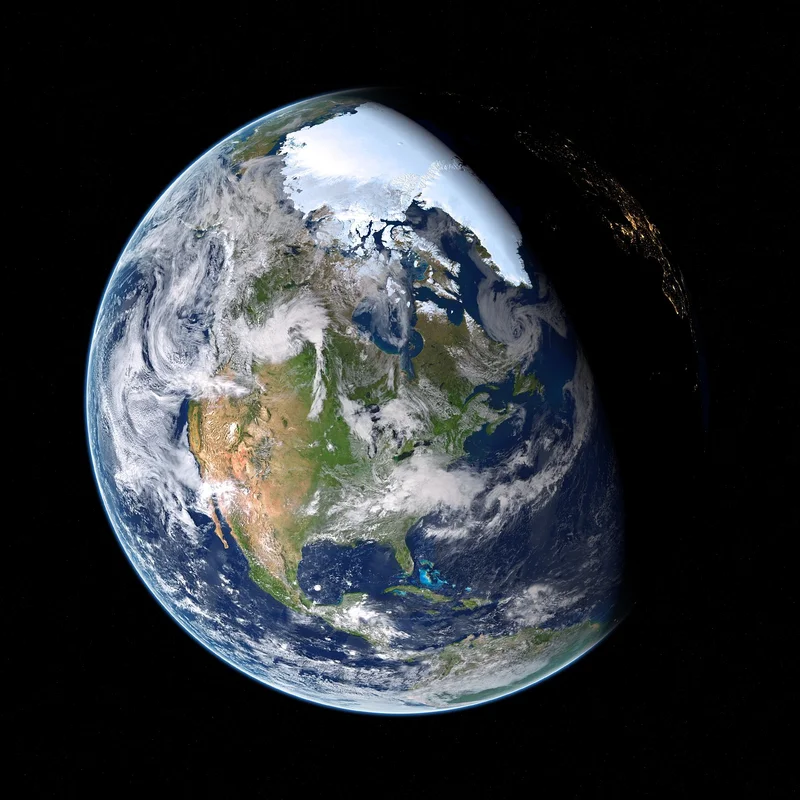
Finlay calls the changes in the Northern Hemisphere "unexpected." He attributes it to circulation patterns in the liquid metal core, but admits, "we are not certain of the exact cause." This is the part of the report that I find genuinely puzzling. "Unexpected" changes in a complex system like Earth's magnetic field… that's a polite way of saying "we don't know what's going on."
The article does note that there's no sign of an impending magnetic field reversal, and that these fluctuations happen on a "decade to century timescale." Which is reassuring, I guess, if you're planning to live for less than a century.
But here’s the rub: The solution offered is to "harden" spacecraft to withstand the radiation. That’s like saying, "Climate change is happening, so let's just build better air conditioners." It's a band-aid, not a cure. And it doesn’t address the increased radiation exposure for astronauts. The article brushes this off by saying their time in orbit is shorter than the lifespan of satellites. True, but still… higher cancer risk isn't exactly a selling point for space travel. Earth's magnetic field has a weak spot — and it's getting bigger, putting astronauts and satellites at risk.
I've looked at hundreds of these "global threat" reports, and this one feels… incomplete. We have data showing a growing problem, but a lack of clear, quantified risk assessments.
So, Should We Be Sweating Bullets?
Probably not. But complacency is a dangerous game. We need better data, clearer risk assessments, and more proactive solutions than just "build tougher satellites." The Earth's magnetic field is like the planet's immune system. And right now, it looks like it's fighting off something nasty. We need to figure out what that "something" is.